
2026-09-14 ·
Common Building Materials That Trap Moisture In Lynnwood Attics
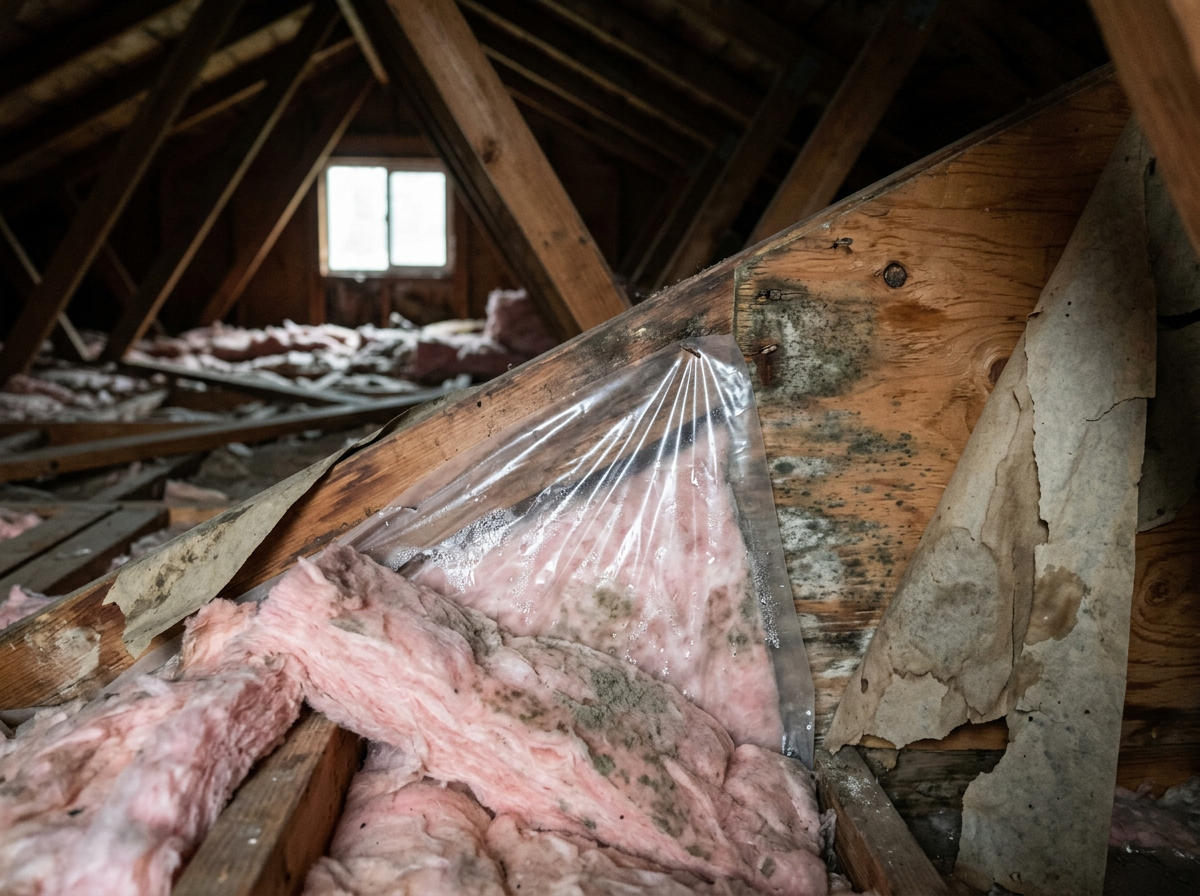
Fiberglass batts, cellulose insulation, and OSB sheathing trap moisture in Lynnwood attics when ventilation is blocked or inadequate. These materials hold water from maritime humidity and stack-effect air movement west of the Cascades. Once saturated they stay damp for months because air movement is restricted by blocked soffits or insulation pushed over eaves.
Fiberglass Batts and Rolls
Fiberglass batts installed between rafters or ceiling joists absorb condensation that forms on the underside of roof sheathing during cool nights. In Lynnwood the nine-month damp season keeps relative humidity above 70 percent for long stretches, so any trapped air space allows water vapor to condense directly onto the glass fibers. The material then holds that moisture against wood framing instead of allowing it to dry toward the ridge vent. Over time the batts sag and create pockets that further reduce airflow. Homeowners often notice dark staining along the north slope where these batts remain wet longest. Proper correction requires removing the saturated insulation before addressing the ventilation shortfall that caused the buildup.
Cellulose and Blown-In Insulation
Cellulose holds far more water than fiberglass because its paper fibers wick moisture along their length. When blown over existing batts or directly onto the attic floor it packs tightly against rafters and can bridge small gaps at the eaves. In western Washington this creates a sponge effect during winter when warm interior air rises and meets cold roof planes. The cellulose then stays at moisture contents above 20 percent for weeks, feeding surface mold on nearby wood. Because the material is dense it also blocks the narrow channels needed for air to move from soffit to ridge. Removal usually means vacuuming the entire depth rather than spot treatment so that new ventilation paths can be established without reintroducing the same moisture trap.
OSB Sheathing and Vapor Retarders
Oriented strand board used as roof decking absorbs water at the edges and around nail penetrations when underlayment fails or ice dams form. Once the strands swell they hold moisture against the top surface of ceiling insulation below. In Lynnwood homes built before 1990 the original asphalt felt often lies directly on the OSB, creating a second impermeable layer that prevents drying to the exterior. Polyethylene vapor barriers stapled to the ceiling drywall compound the problem by stopping any drying from below. The combination keeps the OSB at elevated moisture levels through spring even after outdoor temperatures rise. Replacing sections of sheathing and removing interior vapor barriers are common steps once the source of excess humidity is corrected.
Asphalt Felt and Synthetic Underlayments
Traditional asphalt felt and many synthetic underlayments become moisture traps when attic ventilation ratios fall below 1:150. Condensation that forms on the felt drips back onto insulation or sheathing instead of evaporating outward. In neighborhoods near the Puget Sound the constant marine air keeps felt damp for most of the year. When roof leaks occur the felt also holds water against the OSB longer than breathable alternatives would. Inspectors checking Lynnwood attics routinely find felt that has delaminated in strips along the north-facing slopes where drying potential is lowest. Switching to vapor-open underlayment during re-roofing reduces the risk only if attic airflow is restored at the same time.
Addressing the materials that trap moisture is only one part of solving attic mold. Improving Attic Ventilation To Reduce Mold Risk In Lynnwood explains how to restore airflow after insulation and sheathing are replaced. For homes that already show visible growth, Attic Mold Removal details the sequence of source correction followed by material removal.