
2026-09-14 ·
Cost Factors For Attic Mold Removal In Lynnwood
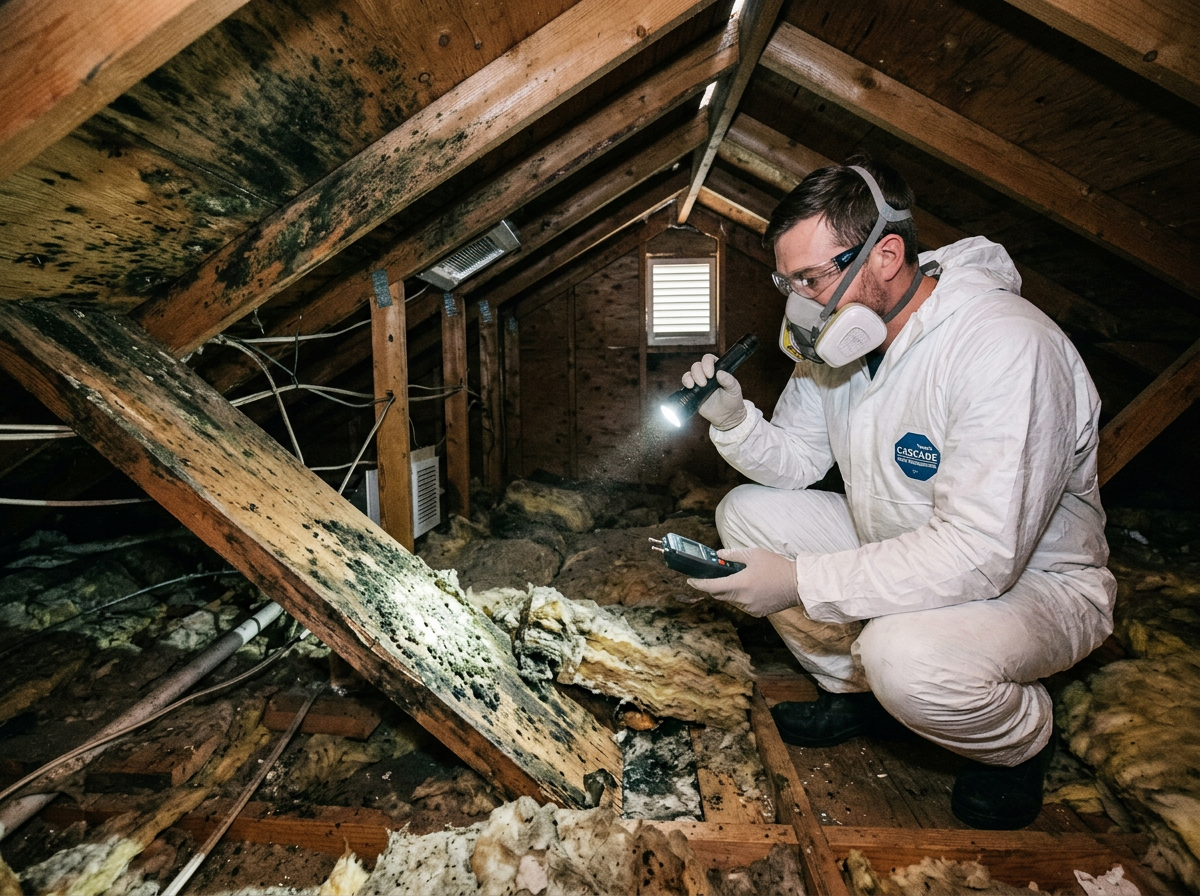
Several factors shape the expense of attic mold removal in Lynnwood, beginning with the scale of ventilation failures such as fans venting into the space, blocked soffits, or insulation covering eaves. North-slope staining often signals prolonged moisture buildup that requires both cleaning and correction. Without fixing these sources, any removal work tends to fall short over time.
Ventilation Failures Driving Attic Mold in Lynnwood
Lynnwood homes frequently develop attic mold when bathroom or dryer fans exhaust directly into the attic instead of through the roof. Blocked soffits and eaves covered by insulation trap humid air, especially during the nine months of maritime damp conditions west of the Cascades. These setups create consistent moisture that supports mold on sheathing and rafters. Homeowners often notice dark staining on the north-facing roof plane first. Correcting the venting paths forms a major portion of any project because simple surface cleaning leaves the airflow problems untouched. Attic mold removal services focus on these mechanical fixes alongside remediation work.
Local Climate Patterns and Moisture Sources
Western Washington’s extended damp periods keep relative humidity elevated for most of the year, pushing attic conditions past the point where mold can stay dormant. Bare-soil crawl spaces contribute through the stack effect, pulling moist air upward into the attic. In contrast, eastern Washington sees more mechanical issues like roof leaks or poor flashing rather than constant humidity. Both regions require identifying the exact moisture pathway before removal begins. Local climate patterns that increase attic mold in Lynnwood explain these seasonal drivers in more detail. Projects that skip this diagnosis step commonly see recurrence within a year or two.
Insulation Removal and Source Correction
Contaminated insulation must often be removed to reach mold on framing, yet the decision depends on how deeply moisture has penetrated. Over-eave insulation blocks airflow and must be adjusted or replaced as part of the work. Safe removal of contaminated insulation from Lynnwood attics outlines the sequence used to avoid spreading spores. Source correction, such as rerouting vents or adding proper intake openings, adds steps that directly influence total project scope. Without these adjustments, cleaned surfaces regain moisture quickly in Lynnwood’s climate.
Moisture Control Measures That Influence Project Scope
Effective long-term results require tying attic work to moisture control steps elsewhere in the home. Adding a vapor barrier with 12-inch overlaps on bare soil in the crawl space reduces the stack effect that feeds attic humidity. Ensuring 1:150 ventilation ratios and clearing soffit intakes prevents future buildup. Moisture control and prevention work often runs alongside attic projects because isolated cleaning rarely holds up. These combined efforts determine whether a job stays limited to the attic or expands to address connected areas.
Practical Next Steps for Lynnwood Homeowners
Start by documenting visible staining and noting any recent fan installations or insulation changes. A thorough inspection identifies whether the issue stems from ventilation, roof leaks, or crawl-space moisture. Once sources are mapped, removal and correction can proceed in a logical order that limits repeat visits. Washington Mold Solutions at 19921 68th Ave W Ste 103, Lynnwood, WA 98036 handles these assessments across the region. Homeowners who combine removal with targeted fixes see more durable outcomes than those who address only visible growth.