
2026-09-14 ·
When To Test Air Quality After Attic Mold Discovery In Lynnwood
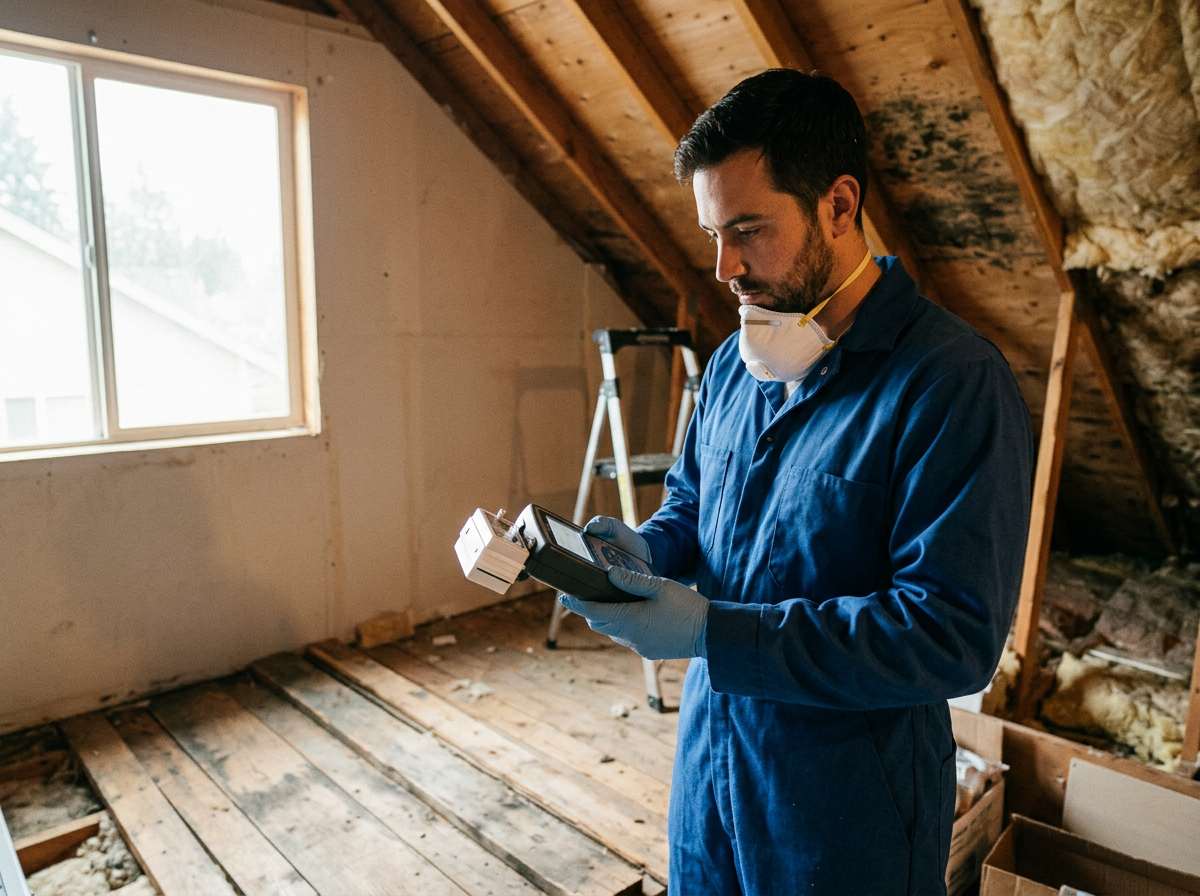
Air quality testing after attic mold discovery in Lynnwood works best once the source has been corrected and cleaning completed, usually 48 to 72 hours after those steps finish. Immediate testing at discovery often captures conditions that will change once fans stop venting into the space and blocked soffits are cleared. Washington homes west of the Cascades face nine months of maritime damp that keeps attics moist when insulation covers eaves or north-slope staining shows up. Testing too early misses whether the stack effect from bare-soil crawl spaces continues to push moisture upward. The goal is to measure conditions after mechanical fixes rather than during active growth.
Identifying Ventilation Failures Common in Lynnwood Attics
Lynnwood attics often develop mold when bathroom or dryer fans vent directly into the space instead of through the roof. Blocked soffits and insulation packed over eaves trap the moisture that arrives during the long damp season. North-slope staining appears first because that side receives less sun and stays cooler. These patterns differ from roof-leak mold because the cause sits in airflow rather than a single puncture. Homeowners who clean growth without fixing the vents see recurrence within one or two seasons. Checking fan routing and soffit clearance before any testing prevents wasted effort on symptoms alone. Seasonal attic inspections help catch these issues early each year.
Correcting Moisture Sources Prior to Testing
Source correction must precede air quality testing so results reflect the fixed environment. In Lynnwood this means rerouting fans, opening eaves, and addressing any bare-soil crawl spaces that feed the stack effect. Arid parts of eastern Washington sometimes show similar growth from mechanical leaks rather than climate, yet the same sequence applies. Once those changes are made, the attic needs time to dry before measurements are taken. Moisture control and prevention work often includes these ventilation adjustments. Testing during active moisture movement gives readings that no longer match the attic after corrections. Waiting allows the space to stabilize under normal Lynnwood conditions.
Recommended Timing for Air Quality Testing
Schedule testing after remediation crews finish and the attic has dried for at least two full days. This window lets any remaining spores settle and gives a clearer picture of post-correction air. In Lynnwood the maritime climate can extend drying time during the wetter months, so visual checks for damp insulation help confirm readiness. Testing right after discovery mainly confirms the presence of mold already seen, while post-correction testing shows whether the ventilation failure has been resolved. Mold inspection and testing services can time visits to this window. Results taken too soon risk showing elevated levels that drop once the attic breathes properly again.
Using Test Results to Guide Further Action
Results guide whether additional cleaning or further ventilation work is needed. Elevated readings after source correction point back to missed spots such as insulation over eaves or fan ducts still terminating inside the attic. Normal readings support moving to routine monitoring rather than repeated remediation. Lynnwood homeowners often pair these tests with seasonal checks to watch for new north-slope staining. Attic mold removal teams can return if tests indicate growth remains. The process stays practical when each step follows the last instead of running tests in isolation from the fixes.