
2026-09-14 ·
Differences Between Attic Mold And Bathroom Mold In Lynnwood Homes
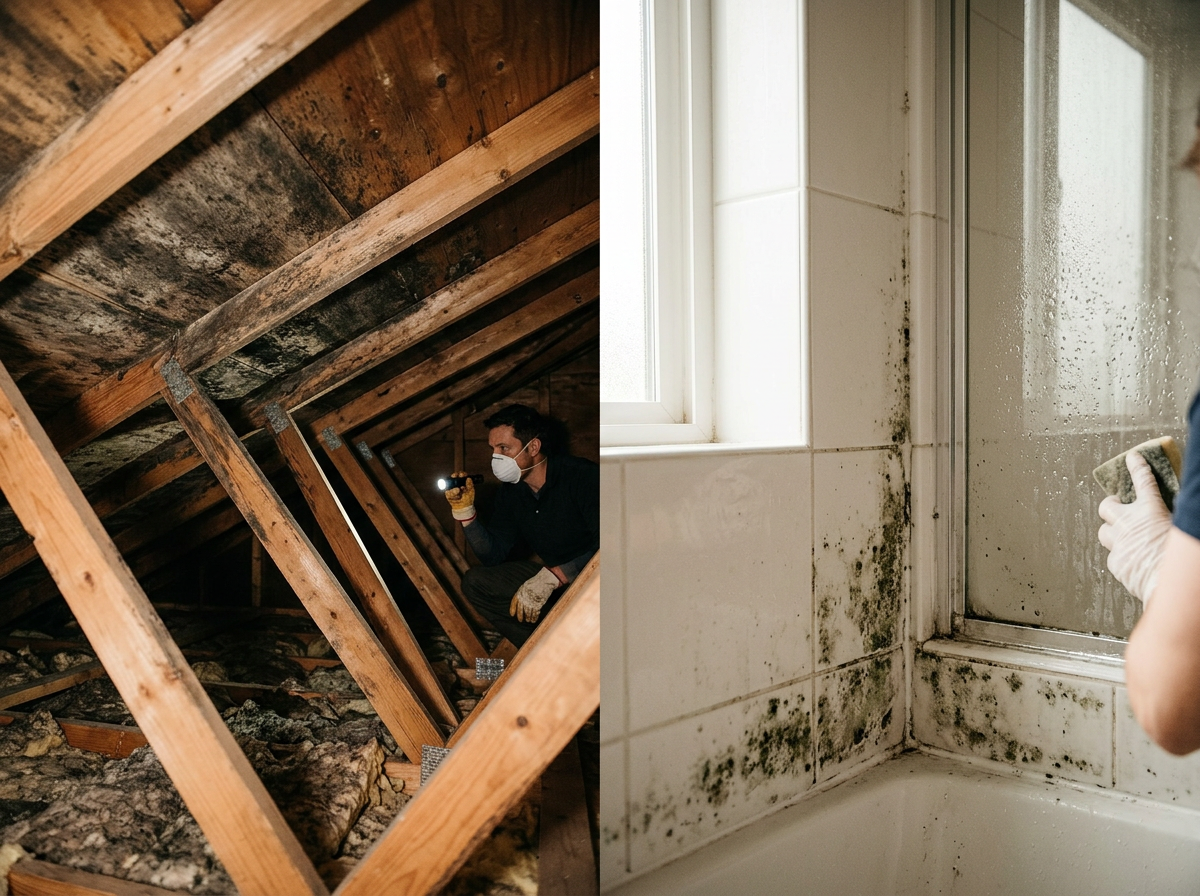
Attic mold in Lynnwood homes usually traces to ventilation failures such as fans venting into attics, blocked soffits, or insulation over eaves on north slopes, whereas bathroom mold develops from daily moisture spikes above 60 percent relative humidity without sufficient exhaust fans or window ventilation. These root differences affect where growth appears, how it spreads, and the steps needed for control under Washington's nine months of maritime damp west of the Cascades.
Causes Tied to Local Conditions
Lynnwood sits in the damp western Washington zone where cool temperatures and frequent rain keep outdoor humidity elevated for most of the year. Attic mold forms when warm indoor air rises through the stack effect and meets cold roof sheathing, especially when bathroom or dryer exhaust is routed into the attic instead of outside. Bare-soil crawl spaces add to the problem by allowing ground moisture to enter living areas and then the attic. Bathroom mold, by contrast, starts from shower steam and poor venting that keeps surfaces wet for hours after use. Cleaning either without fixing the moisture source leads to quick return because the underlying humidity imbalance remains unchanged. In eastern Washington the pattern shifts to mechanical issues like roof leaks, but Lynnwood homes see the maritime pattern dominate.
Growth Locations and Visible Indicators
Attic mold often shows as dark staining on north-slope roof sheathing or insulation near eaves where airflow is restricted. Homeowners may notice musty odors in upper rooms or discolored drywall around ceiling penetrations. Bathroom mold appears on caulk lines, tile grout, or ceiling surfaces directly above showers where condensation collects nightly. The patterns differ because attics experience seasonal temperature swings that promote hidden growth behind insulation, while bathrooms see surface-level spots from repeated wetting. Checking soffit vents for blockage or confirming that exhaust ducts terminate outdoors helps separate attic issues from the more localized bathroom pattern.
Inspection Steps and Next Actions
Start by examining bathroom exhaust fans to confirm they vent through the roof or wall rather than into the attic space. For attics, look for insulation gaps over eaves and ensure soffits remain clear of debris. Mold inspection and testing can map moisture levels and identify hidden growth without guessing. Readers who suspect attic involvement often continue to how to check your attic for mold in Lynnwood homes for a room-by-room checklist. Bathroom checks focus on fan runtime and surface drying times after showers. Both benefit from addressing the source before any cleaning begins.
Remediation and Prevention Differences
Attic mold removal requires source correction such as rerouting vents and restoring airflow before any cleaning, while bathroom mold removal centers on improving exhaust capacity and sealing surfaces. In both cases, simply wiping visible growth fails when humidity stays elevated. Lynnwood homes gain from adding ridge and soffit ventilation ratios that match roof area, using vapor barriers with at least 12-inch overlaps in crawl spaces, and running bathroom fans for 20 minutes after showers. These targeted fixes prevent recurrence because they match the specific moisture path—upward stack effect for attics versus daily surface wetting for bathrooms. Mold remediation follows the same principle of fixing the cause first.